AI & LLM Engineering
What This Category Covers
Practical engineering guides on building with large language models and AI agents in production. This category covers the full stack of applied AI engineering: designing retrieval-augmented generation (RAG) pipelines with vector databases like Qdrant, building knowledge graphs with Neo4j, structuring prompts for reliability, running evals to catch regressions before they reach users, and building AI agent tooling with the Model Context Protocol (MCP) so tools like Claude and other assistants can safely interact with your APIs and data.
Every article is written from hands-on production experience, not theoretical demos, and focuses on engineering decisions that matter once real users depend on your AI features: latency, cost control, hallucination mitigation, context window management, and observability. If you’re a backend or full-stack engineer moving from prototype AI features into production-grade systems, these guides walk through the architecture patterns, trade-offs, and failure modes that only show up once real traffic and real data hit the system.
Model Routing and Cost Control
Model routing is a recurring theme in this category because no single model is right for every task. A well-built AI system routes cheap, fast requests (intent classification, simple extraction, short summarization) to smaller models, and reserves larger models like Claude Opus for reasoning-heavy steps such as multi-step planning, code generation, or synthesizing conflicting sources. Getting this routing logic right can cut inference costs by 60-80% without a noticeable quality drop for end users, and several posts in this category walk through how to build that routing layer, cache repeated completions, and batch requests where latency budgets allow it.
Evaluation as a First-Class Discipline
Evaluation is treated as a first-class engineering discipline here, not an afterthought. Before shipping a change to a prompt, a RAG retrieval strategy, or a fine-tuned model, the posts in this section cover building small, targeted eval sets from real production traffic, scoring outputs against rubrics or reference answers, and wiring evals into CI so a regression in retrieval quality or hallucination rate gets caught before a deploy rather than after a user complaint. This includes practical guidance on using LLM-as-judge scoring carefully, when to fall back to human review, and how to track eval metrics over time as a model provider ships updates.
Deployment and Infrastructure Decisions
Deployment and infrastructure decisions get equal attention: when to run inference through a hosted API versus self-hosting an open-weight model, how to size vector database infrastructure (Qdrant, pgvector, or managed alternatives) for a given corpus size and query volume, and how to structure background workers so embedding generation and document ingestion don’t block user-facing requests. Several articles cover containerizing these services with Docker, deploying behind a queue (BullMQ or similar) for ingestion pipelines, and monitoring token usage and latency percentiles in production dashboards rather than relying on spot checks.
Security and Data Handling
Security and data handling are woven into nearly every guide, since AI features frequently touch sensitive customer data. That means designing RAG pipelines so retrieved context respects the same row-level permissions as the underlying database, scrubbing PII before it reaches a third-party model provider where required, and being deliberate about what gets logged for debugging versus what should never leave your own infrastructure. For teams integrating Claude, ChatGPT, or other assistants via MCP or custom tool-calling, this also covers scoping tool permissions tightly so an agent can only call the APIs it actually needs, and auditing what an agent did after the fact.
Tracking a Fast-Moving Ecosystem
Finally, this category tracks the practical, fast-moving side of the ecosystem: new connector protocols, changes in context window limits and pricing across providers, and patterns for keeping an AI feature maintainable as the underlying models improve every few months. The goal across all of these posts is the same: help engineers ship AI features that hold up under real production load, real data quality issues, and real cost constraints, rather than features that only work well in a demo.
Common Failure Modes
Common failure modes get their own attention across this category, because most of the real learning in production AI systems comes from things breaking in ways a demo never surfaces. That includes retrieval returning technically-relevant but practically-useless chunks because embeddings were generated at the wrong granularity, prompts that work reliably in testing but degrade once real user phrasing and typos enter the mix, and context windows quietly overflowing during long conversations in ways that silently drop earlier instructions instead of erroring loudly.
Tooling and Developer Experience
Tooling and developer experience around these systems matters more than it first appears: how to structure a local development setup so testing a RAG pipeline or agent doesn’t require burning API credits on every save, how to snapshot and replay real production conversations for debugging without exposing sensitive user data to every engineer on the team, and how to build internal dashboards that make it obvious when a prompt change quietly regressed quality for a subset of users rather than everyone.
Vendor and Model Selection
Vendor and model selection is treated as an ongoing decision rather than a one-time choice: how to structure code so swapping between Claude, GPT, and open-weight models doesn’t require rewriting the application logic, how to benchmark a new model release against your own eval set before adopting it rather than trusting a vendor’s own benchmark numbers, and how to plan for the inevitable deprecation of a model version your system depends on.
Latest Posts in This Category
The articles below apply these principles to real production systems, from RAG pipelines to agent tooling built with the Model Context Protocol.
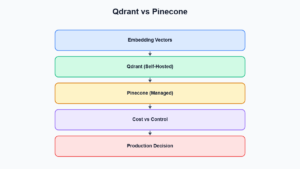
Qdrant vs Pinecone: Self-Hosted Vector Search for Production RAG
If you’re building a production retrieval-augmented generation (RAG) system, the Qdrant vs Pinecone decision is one of the few infrastructure choices you’ll live with for years. Both are capable vector...
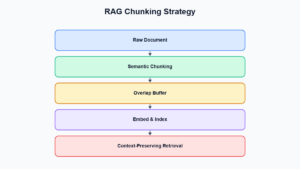
How to Design a Chunking Strategy for RAG That Doesn’t Destroy Context
Every retrieval-augmented generation system eventually comes down to one uncomfortable truth: the model can only answer as well as the chunks it retrieves. Teams spend weeks comparing embedding models, tuning...
Multi-Tenant AI SaaS Architecture: Patterns for Shared Models, Isolated Data
How to structure a multi-tenant AI SaaS feature so tenant data, cost, and context stay properly isolated — the shared model layer, tenant isolation layer, and per-tenant governance pattern.
The AI Agent Ecosystem 2026: An Engineering Guide to Architecture, MCP, and What Actually Ships
Most content ranking for AI agent ecosystem 2026 right now is written for investors and executives. It’s full of adoption percentages, market-size estimates, and framework popularity charts. That’s a fine...
Claude Connectors (Claude Connections): A Technical Guide to MCP, Custom Builds, and Security
Most content ranking for Claude Connectors right now is a listicle: “10 best connectors,” “21 favorite connectors,” a GitHub directory cataloguing hundreds of them. That’s useful if you’re a Claude...
Claude for Students: A Practical Guide to the Free Tier, Academic Integrity, and Education Access
Search for Claude for Students today and you’ll mostly find two kinds of pages: Anthropic’s own institutional marketing for universities, and “student discount” roundups that all arrive at the same...
Claude Opus vs Sonnet: A Cost and Routing Guide for Engineering Teams
Every team building on Anthropic’s models eventually hits the same fork in the road: Claude Opus vs Sonnet. The blog posts that rank for this today mostly repeat the same...
AI Governance Paralysis: Why Committees Can’t Fix It, But Your Architecture Can
AI governance paralysis is what happens when an organization knows it needs to govern its AI systems. It forms the committees, drafts the policies — and still can’t ship anything,...
AI Agent Tool Use: Designing Safe Boundaries for Production Automation
AI agent tool use is what turns a language model from a text generator into an actor inside your production systems, and that shift changes the risk calculus completely. A...
OpenAI vs Anthropic API for Production SaaS Features: A Technical Comparison
Every engineering team that ships an AI feature eventually has the same meeting: someone pulls up a pricing page, someone else pastes a benchmark screenshot from a forum post, and...