Case Studies
What This Category Covers
Real client case studies showcasing the architecture decisions, trade-offs, and problem-solving behind production systems delivered for startups and growing businesses. Each case study walks through a specific engineering challenge, scaling a SaaS platform under growing user load, rebuilding a legacy WordPress site for performance and security, integrating payment systems like Stripe and Reepay, or designing a microservice to handle a bottleneck in an existing architecture, and documents the actual decisions made, the alternatives considered, and the measurable outcomes: faster page loads, reduced infrastructure costs, higher conversion rates, or improved reliability.
These aren’t marketing case studies; they’re engineering write-ups intended for other developers and technical decision-makers who want to see how real projects were actually built, what went wrong along the way, and how those problems were solved.
Case studies in this category span a range of industries and technical challenges: a PDF generation microservice built to offload a bottleneck from a monolithic application, a digital platform rebuild for a retail brand that needed to handle significant traffic without sacrificing reliability, a warranty management platform redesigned around clearer business logic and faster page loads, and multi-tenant SaaS architecture work that keeps one customer’s data and automation strictly isolated from another’s.
Each write-up includes the starting conditions, the constraints that shaped the solution, such as budget, timeline, existing technical debt, or a hard deadline, and the concrete engineering decisions made along the way, from database schema choices to how background jobs and third-party integrations were structured.
Readers of this category are typically technical leads, engineering managers, or founders evaluating how a project like theirs might actually be scoped and built, as well as other engineers looking for real-world examples of production architecture decisions rather than idealized textbook diagrams.
How Each Case Study Is Structured
Each case study in this category follows the same discipline: start with the business problem as the client described it, not the technical solution as an afterthought. That means covering the constraints that shaped the engineering decisions, whether a hard compliance deadline, a legacy system that couldn’t be taken offline during migration, a team with limited DevOps capacity, or a budget that ruled out certain infrastructure choices outright. Readers get the reasoning behind trade-offs, not just a list of technologies used.
PDF Generation Microservice
The PDF microservice case study covers extracting a slow, memory-heavy PDF generation feature out of a monolithic Laravel application into an isolated service, including the queueing strategy used to keep report generation from blocking the main application, how failures and retries were handled without losing generated documents, and the measurable impact on response times for the rest of the application once the heavy workload was isolated.
Retail Platform Rebuild
The retail platform rebuild walks through modernizing an aging e-commerce codebase without a full stop-the-world rewrite: how the migration was sequenced feature by feature behind feature flags, how data was kept in sync between old and new systems during the transition period, and how the team validated correctness before fully cutting over, including the specific testing and monitoring strategy used to catch discrepancies early.
Warranty Platform Case Study
The warranty platform case study covers building a multi-step claims workflow with strict audit requirements, including how state transitions were modeled so a claim’s history could never be silently altered, how document uploads and verification were integrated into the workflow, and how the system was designed to scale from a handful of claims a day to a much higher volume without a redesign.
Multi-Tenant SaaS Architecture
The multi-tenant SaaS architecture study is one of the most requested topics on this site: how to share a single set of AI models and application infrastructure across many tenants while keeping each tenant’s data completely isolated, including the database-per-tenant versus shared-schema trade-off, how row-level security and query scoping were enforced so a bug in one part of the codebase couldn’t leak data across tenants, and how the cost of running shared AI infrastructure was allocated back to individual tenants for billing.
What Readers Take Away
Across all of these, the goal is to give other engineers and technical decision-makers a realistic view of what a project like this actually costs in time and complexity, what tends to go wrong, and what a defensible architecture actually looks like once it has survived contact with production traffic and real edge cases, rather than the simplified version that shows up in a sales pitch.
Measuring Success
Measurement is a consistent theme across these write-ups: rather than closing a case study with a vague claim of success, each one covers the specific metric that mattered for that project, whether that was report generation time dropping from minutes to seconds, checkout conversion holding steady through a full platform migration with zero unplanned downtime, claim processing time dropping because manual verification steps were automated safely, or infrastructure cost per tenant decreasing after a shared-resource redesign.
Post-Launch Maintenance
Post-launch maintenance is covered honestly as well, since a project isn’t finished at deployment: how each system was monitored in the weeks after launch to catch issues that only appear under real usage patterns, what kind of support arrangement made sense once the initial build was handed off, and which parts of each system needed revisiting a few months later as usage patterns became clearer than they were during initial planning.
Client Communication and Engagement Structure
Client communication and expectation-setting run through every one of these engagements, not just the technical delivery: how project scope and success criteria were agreed on before a single line of code was written, how progress was reported in a way a non-technical stakeholder could actually follow, and how scope changes mid-project were handled without derailing the original timeline or budget.
Several of these case studies also cover the decision to buy versus build for specific pieces of functionality, when integrating an existing payment processor, search service, or authentication provider was the right call versus building something custom, and what that trade-off looked like once the system was actually running in production under real usage.
Team composition and handoff are covered honestly as well: whether a project was delivered by a single engineer end-to-end or a small team, how work was divided so nothing became a bottleneck waiting on one person, and what documentation and knowledge transfer looked like once a project moved from active development into a longer-term maintenance phase with the client’s own team or a different support arrangement.
Latest Case Studies
The write-ups below walk through each of these engagements in full, including the constraints, trade-offs, and measurable outcomes.

5 Proven Ways the WingWarranty Car Warranty Platform Boosts Efficiency — Laravel, Vue.js & React Case Study
A modern digital platform interface showing vehicle warranty registration, claims tracking, and secure payment features powered by Laravel, Vue.js, React, and Stripe.
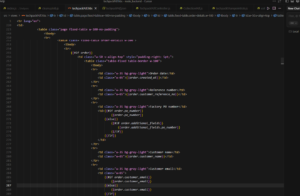
PDF Generation Microservice Case Study: 5 Proven Wins from Custimoo Manufacturing Automation
This PDF generation microservice case study shows how Custimoo automates manufacturing-ready tech pack PDFs using Node.js, Bull, and Puppeteer.
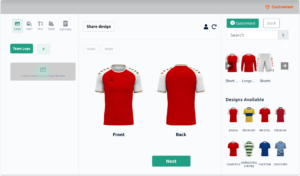
Innovative Sportswear Customization Platform Case Study 2026 – Custimoo
Custimoo is a next-generation sportswear customization platform that enables real-time product design using Fabric.js and Three.js. Built with Laravel and Vue.js, it integrates seamlessly into WordPress, Shopify, and other CMS platforms using Shadow DOM technology, delivering conflict-free embedding, dynamic pricing, and secure Stripe payments.