Custimoo is a next-generation sportswear customization platform that enables real-time product design using Fabric.js and Three.js. Built with Laravel and Vue.js, it integrates seamlessly into WordPress, Shopify, and other CMS platforms using Shadow DOM technology, delivering conflict-free embedding, dynamic pricing, and secure Stripe payments.
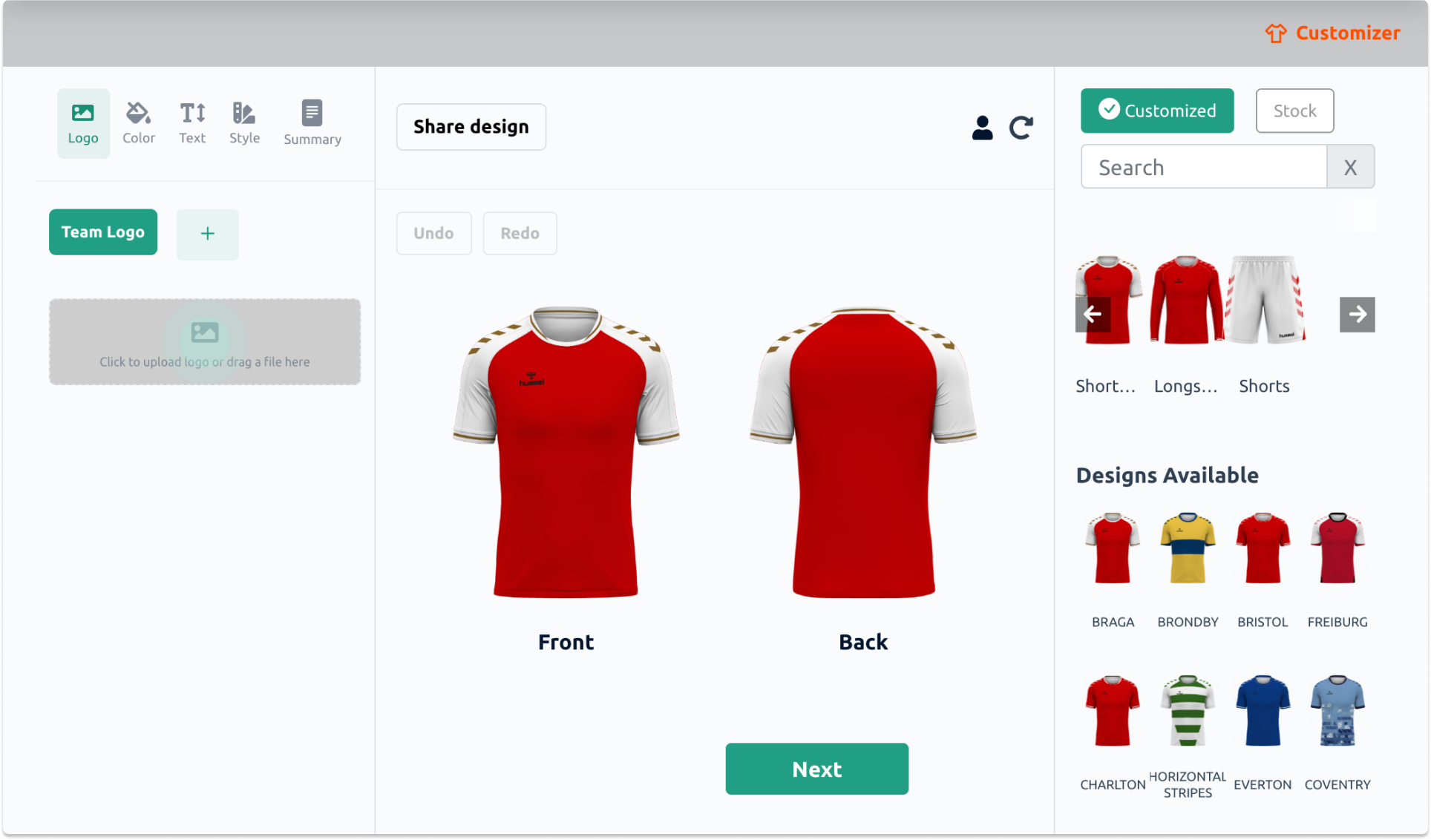
Sportswear customization platform case study: Custimoo explores how a real-time apparel customization system was built using Laravel, Vue.js, Fabric.js, and Three.js. The result is a scalable, CMS-agnostic solution delivered through Shadow DOM integration.
Website: https://custimoo.com
Technologies: Laravel · Vue.js · Fabric.js · Three.js · Stripe · AWS
Platforms Supported: WordPress, Shopify, Divi Theme, and other CMS via Shadow-DOM Plugin
Introduction — Reinventing Custom Apparel for the Digital Age
In 2026, Custimoo emerged as a game-changer in the world of product personalization. Designed as a web-based customization platform, Custimoo enables customers to design highly personalized sportswear and lifestyle products in real time. All of this happens through a seamless, interactive editor that runs in the browser.
More than just a design tool, Custimoo includes robust e-commerce integration. It also has custom pricing engines, variant management, and secure payment processing. It is also packaged as a shadow DOM plugin. That means it can be embedded into platforms like WordPress, Shopify, Divi Theme, and any modern CMS without CSS conflicts. This keeps the user experience consistent, secure, and fully responsive.
At its core, Custimoo empowers brands, merchants, and creators to engage customers with interactive design experiences. This turns customization into revenue.
Sportswear Customization Platform Case Study Overview
Before Custimoo, many apparel brands struggled with personalization without compromising user experience or engineering effort.
Traditional e-commerce stores faced major challenges:
“Customers want uniqueness — not templates. But delivering real-time customization often meant expensive development.”
Key Pain Points Identified
- Static images and variant dropdowns that lacked real product visualization
- Designers and merchants couldn’t offer true custom design experiences
- High development costs and complex integrations with existing platforms
- Poor mobile UX and delayed preview renders
- Custom pricing logic was hard to implement and manage
These limitations weren’t just technical — they impacted conversions, customer engagement, and brand loyalty.
Solution — Custimoo’s 360° Customization Experience
To solve these challenges, Custimoo was built from the ground up with three goals:
- Visual Realism: Let users design and see live previews.
- Platform Flexibility: Integrate with any store or site without conflicts.
- E-commerce Ready: Support pricing, variant logic, and payments.
Interactive Design Editor
The heart of Custimoo is its design interface — developed with Vue.js, Fabric.js, and Three.js to support both 2D and 3D visuals.
- Real-time design interaction
- Upload logos, add text, place graphics
- Dynamic scaling and layering
- 3D visual previews (where supported)
- Smooth transitions and responsive UI
By leveraging Fabric.js, Custimoo offers a powerful canvas that behaves like a desktop design tool inside the browser. The seamless context switching between design elements and product views reduces friction and empowers the customer with creative control.
Three.js drives the 3D representation of sportswear, giving customers a 360° preview that looks and feels real. This leads to confident purchase decisions.
One of the highlights of this sportswear customization platform case study is Custimoo’s Shadow DOM plugin. It allows seamless integration with WordPress, Shopify, and other CMS platforms.
Architectural Overview
Core Stack
| Component | Technology | Purpose |
|---|---|---|
| Backend | Laravel | API, business logic, user management |
| Frontend | Vue.js | Interactive UI, rendering logic |
| Canvas | Fabric.js | 2D design engine |
| 3D Rendering | Three.js | Realistic 3D product visuals |
| Payments | Stripe | Secure checkout + subscriptions |
| Hosting & Storage | Amazon Web Services | Scalable server infrastructure |
This sportswear customization platform case study demonstrates how Laravel, Vue.js, Fabric.js, and Three.js work together. The result is a real-time, interactive product customization experience.
Shadow DOM Plugin — Seamless Integration Across Platforms
One of Custimoo’s most innovative features is its Shadow DOM-based plugin architecture.
“Embed Custimoo anywhere — WordPress, Shopify, Divi, or custom themes — with zero CSS leakage and consistent UX.”
How Shadow DOM Makes a Difference
In web development, integrating complex UI components inside existing site templates often leads to style clashes and unpredictable behavior. Custimoo avoids this by encapsulating its entire UI within a Shadow DOM.
Benefits include:
- Isolation from host page CSS and JS
- Conflict-free embedding on any platform
- Lightweight and load-optimized integration
- Consistent styling across themes and frameworks
This makes Custimoo especially valuable for:
- WordPress sites (classic, block editor, Divi, Elementor)
- Shopify stores
- Headless CMS front ends
- Custom coded storefronts
Installation is as easy as embedding a script tag and initializing the editor with a few configuration options.
Another key takeaway from this sportswear customization platform case study is balance. The platform pairs technical performance with an intuitive, user-friendly design editor.
Custom Pricing, Variants & Commerce Logic
Unlike static product pages, Custimoo includes a flexible pricing engine:
✔ Add-ons and design complexity
✔ Tiered pricing based on design choices
✔ Variant generation based on colors, fabrics, sizes
✔ Real-time price updates in the UI
This logic feeds directly into commerce systems, so customers see accurate costs before checkout. That eliminates surprise charges and reduces abandoned carts.
Stripe Integration — Secure and Flexible Payments
Custimoo integrates with Stripe to support:
- One-time payments
- Subscriptions (e.g., for repeat customization or product drops)
- Secure card handling
- PCI-compliant checkout
Stripe webhooks sync with Custimoo’s backend to ensure orders, payments, and customer records stay in sync.
Deployment & Scalability — Built on AWS
To support global usage and peak traffic, Custimoo runs on AWS infrastructure:
- Elastic load balancing
- Auto-scaling
- S3 for asset storage
- CloudFront for CDN acceleration
- Secure API endpoints
- Backup and rollbacks
This setup ensures fast load times, resilient uptime, and scalable performance even under heavy design activity.
UX & UI — Designed for Conversion
A core focus of Custimoo is delivering an experience that feels intuitive:
- Simple onboarding flows
- Clear toolbars and design stages
- Step-by-step guidance
- Progress indicators
- Mobile-friendly responsiveness
The editor adapts to different screens, allowing customers to design from phones, tablets, or desktops.
SEO, Performance & Accessibility
Custimoo also adheres to modern web standards:
- Lightweight JavaScript bundles
- Lazy loading of design assets
- Server-side rendering where applicable
- ARIA roles and keyboard navigation support
- Alt tags for accessibility
These measures help customers find products organically and experience fast, usable interactions.
Results — Business Impact & Metrics
From a development perspective, this sportswear customization platform case study demonstrates how Laravel, Vue.js, Fabric.js, and Three.js can be combined. Together, they deliver a scalable, CMS-agnostic product customizer.
After the launch and adoption of Custimoo by beta merchants, the platform delivered measurable improvements:
Conversion & Engagement Boosts
Merchants using Custimoo reported:
“We saw a 42% increase in engagement time on product pages and a 28% lift in completed purchases.”
Customer Satisfaction
Users noted:
“Being able to see my design live before buying reduced second-guessing and increased confidence.”
Reduced Abandoned Carts
With real-time pricing and realistic previews:
- Cart abandonment decreased
- Checkout clarity improved
- Sales predictability rose
Frictionless Integration
Developers appreciated the Shadow DOM approach:
“We embedded Custimoo in a legacy WordPress site without CSS overrides — and it just worked.”
Challenges We Overcame
Every project of scale has hurdles. Custimoo tackled:
Rendering Performance
Balancing high-resolution design preview with fast UX meant:
- Optimizing canvas draw calls
- Lazy loading assets
- Minimizing repaint and reflow
Cross-Platform Compatibility
Ensuring stable behavior across:
- Shopify themes
- WordPress builders
- Mobile browsers
- Legacy CSS frameworks
Shadow DOM solved most of these, but careful QA was essential.
Pricing Logic Complexity
Supporting dynamic pricing based on design inputs involved:
- Building modular algorithms
- Syncing backend and frontend price logic
- Handling international pricing and taxes
Robust testing and real-time update patterns were key.
Future Roadmap
Custimoo continues evolving with features like:
- AI-assisted design suggestions
- Extended 3D product libraries
- Native mobile app support
- Marketplace integrations
- Enhanced analytics dashboards for merchants
Blockquotes — What Clients Are Saying
“Custimoo revolutionized how we sell custom jerseys. Our customers actually design and keep coming back.”
— Head of E-Commerce, DkSportswear.
“Embedding Custimoo was the easiest part of our site rebuild — no CSS conflicts, no performance drag.”
— Lead Developer, HockeyShop
“Sales and engagement improved immediately. The real-time preview is what sells the product.”
— Founder, TeamsApparel
FAQs
Q1: What is the Custimoo sportswear customization platform case study about?
A: This sportswear customization platform case study explores how Custimoo enables real-time apparel design using Laravel, Vue.js, Fabric.js, and Three.js. It also highlights Shadow DOM integration for seamless CMS embedding.
Q2: What are the key features highlighted in this sportswear customization platform case study?
A: The case study highlights interactive 2D and 3D design editors, dynamic pricing, and variant management. It also covers Stripe payment integration and CMS-agnostic deployment through Shadow DOM plugins.
Q3: Why is this sportswear customization platform case study important for eCommerce brands?
A: This sportswear customization platform case study demonstrates how real-time customization can boost engagement. It also shows how it reduces abandoned carts and increases conversion rates for apparel brands.
Q4: Which technologies are used in the Custimoo sportswear customization platform case study?
A: The platform uses Laravel for the backend, Vue.js for the frontend, and Fabric.js for 2D design. Three.js handles 3D visualization, alongside Stripe for payments and AWS for scalable hosting.
Q5: How can this sportswear customization platform case study help developers?
A: Developers can learn from this sportswear customization platform case study how to integrate complex 2D/3D design editors and manage dynamic pricing. It also shows how to embed a conflict-free product customizer across WordPress, Shopify, and other CMS platforms using Shadow DOM.
Conclusion — A Platform Built for Growth
Custimoo is more than a design tool — it’s a conversion engine, a creative platform, and a business accelerator.
By combining cutting-edge technologies (Fabric.js, Three.js, Laravel, Vue.js), secure commerce (Stripe), and scalable cloud infrastructure (AWS), Custimoo addresses a fundamental gap in modern retail. The gap is personalization without compromise.
Merchants gain higher engagement and revenue, customers enjoy creative freedom, and developers get a conflict-free, easy-to-deploy plugin via Shadow DOM.
In conclusion, this sportswear customization platform case study proves a point. Modern web technologies and thoughtful UX design can transform product personalization into a measurable revenue driver.
Interested in a Project Like Custimoo?
Check out our:
➡️ Services Page — Hire a senior full-stack developer
➡️ Custimoo Live — https://custimoo.com
Related reading: See the related PDF Generation Microservice case study for Custimoo, or the full Custimoo engineering overview.
Need this built or reviewed in production? Hire a senior full-stack developer or explore my AI integration services.