Backend Engineering
What This Category Covers
Practical backend engineering guides covering Laravel, Node.js, and .NET Core, the frameworks used to build the APIs, services, and data layers behind modern web and SaaS applications. Topics include designing RESTful and GraphQL APIs, authentication and authorization patterns (OAuth, JWT, session-based auth), database schema design and query optimization across MySQL and PostgreSQL, caching strategies, queue-based background processing, and hardening applications against common security vulnerabilities like SQL injection, XSS, and broken access control.
Each guide is grounded in real production challenges: handling traffic spikes without downtime, structuring multi-tenant systems, integrating third-party payment and messaging APIs, and keeping response times fast as data volume grows. Whether you’re architecting a new service from scratch or debugging performance issues in an existing system, these articles focus on decisions that hold up under real-world load rather than textbook examples.
A recurring theme in this category is authentication and API security done right: comparing token-based approaches like Laravel Sanctum against full OAuth2 implementations like Laravel Passport, choosing the correct auth strategy for a given API surface, and applying defense-in-depth so a single misconfiguration doesn’t compromise an entire system. Performance-focused guides cover tuning ASP.NET Core APIs for high-traffic workloads, structuring background job processing with tools like Bull Queue and BullMQ in Node.js, and designing database indexes and query patterns that stay fast as tables grow into the millions of rows.
Readers of this category are typically backend and full-stack engineers responsible for systems that need to stay reliable under real production load, not just pass a local test suite. The goal is always the same: concrete, opinionated guidance grounded in what actually breaks in production, with enough context on the trade-offs that you can adapt the pattern to your own stack rather than copy it blindly.
Testing Practices
Testing is treated as non-negotiable in this category. Posts here walk through structuring feature and unit tests for Laravel with Pest or PHPUnit, mocking external services cleanly so tests stay fast and deterministic, and setting up database factories that model realistic multi-tenant data instead of trivial fixtures. For Node and .NET Core services, the same philosophy applies: contract tests between services, integration tests that spin up real databases in containers rather than mocking the ORM, and CI pipelines that run the full suite on every pull request before merge, not just before a release.
Queue and Background Job Design
Queue and background job design gets dedicated coverage because most production backend bugs show up under concurrency, not in a single-request happy path. Articles here cover idempotency keys for retried jobs, structuring BullMQ and Laravel queue workers so a slow third-party API call doesn’t block an entire queue, dead-letter handling for jobs that fail repeatedly, and monitoring queue depth and job latency so a backlog gets caught in dashboards before customers notice delayed emails or webhooks.
Authentication and Authorization
Authentication and authorization patterns are covered in depth beyond the basics: choosing between session-based auth, Sanctum tokens, and Passport OAuth2 flows depending on whether you’re serving a first-party SPA, a mobile app, or third-party API consumers; structuring role-based and attribute-based access control so permission checks don’t turn into an unmaintainable tangle of conditionals; and safely rotating secrets and API keys in production without downtime.
Database Design and Performance
Database design and performance is another recurring thread, covering indexing strategy for high-write tables, when to denormalize for read performance versus keeping strict normalization, connection pooling under load for both Postgres and MySQL, and diagnosing N+1 query problems in Eloquent or Entity Framework before they become a production incident. Several posts also cover safe migration strategies for tables with millions of rows, including backfilling new columns without locking the table for the length of a deploy.
Running Backend Services in Production
Finally, this category covers the operational side of running backend services in production: structured logging that’s actually searchable during an incident, setting up alerting thresholds that catch real problems without drowning the team in noise, and designing graceful degradation so a failure in one dependency (a third-party API, a cache layer, a search index) doesn’t cascade into a full outage. The throughline across every post is building backend systems that stay maintainable and debuggable as they scale, not just systems that work on day one.
Common Failure Patterns
Common failure patterns get honest coverage here too: race conditions in payment or inventory logic that only appear under real concurrent load, migrations that pass in staging but lock a production table for minutes because the data volume is orders of magnitude larger, and cache invalidation bugs where a stale value gets served long after the underlying data changed because an invalidation path was missed in one code path out of several.
Framework-Specific Guidance
Framework-specific depth is a priority rather than generic advice that could apply to any stack: Laravel-specific guidance on service container binding patterns that stay testable, event and listener design for decoupling side effects from core business logic, and structuring form requests and policies so authorization logic doesn’t leak into controllers. For Node and .NET Core, similar depth on dependency injection patterns, middleware pipelines, and structuring a service layer that stays framework-agnostic enough to survive a future migration.
Team and Process Considerations
Team and process considerations round out this category: how to structure code review standards so they catch real issues without becoming a bottleneck, documenting architectural decisions so the reasoning survives past the original author leaving the project, and onboarding new backend engineers onto a codebase with existing technical debt without pretending that debt doesn’t exist.
Deployment Safety, On-Call, and Rate Limiting
A related but distinct concern in this category is deployment and release safety for backend services: structuring blue-green or rolling deployments so a bad release can be rolled back in seconds rather than minutes, feature-flagging risky backend changes so they can be disabled without a redeploy if something goes wrong in production, and running database migrations in a way that is backward compatible with the previous version of the application during a rolling deploy window.
Several posts also cover the operational discipline of on-call rotations for backend services: what a reasonable escalation path looks like when an alert fires at 2am, how runbooks should be written so any engineer on the rotation can act on an incident without waiting for the original author of a system, and how post-incident reviews should focus on process and system gaps rather than assigning blame to whoever was on call when something broke.
Rate limiting and abuse protection at the API layer get dedicated coverage as well, since a backend that works perfectly for legitimate traffic can still fall over under a burst of retries from a misbehaving client or a deliberate abuse pattern: token bucket versus sliding window rate limiting strategies, how to apply different limits per API key or per tenant in a multi-tenant system, and how to return clear, actionable error responses so well-behaved clients can back off gracefully instead of hammering a struggling endpoint.
Latest Posts in This Category
The articles below apply these patterns to real backend systems built with Laravel, Node.js, and .NET Core.
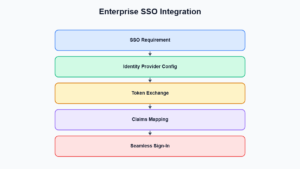
Enterprise SSO Integration in ASP.NET Core: Common Pitfalls
The first enterprise SSO integration a team ships is rarely the hard part — wiring up an OpenID Connect middleware or a SAML library against a demo identity provider takes...
Node.js vs Laravel for Backend APIs: An Honest Technical Comparison
Every few months, a technical lead on a new product opens a ticket titled something like “backend framework decision” and closes it three weeks later having learned more about their...
Securing Sensitive Data in ASP.NET Core APIs: A Practical Guide
Securing sensitive data in ASP.NET Core APIs is not an optional afterthought you bolt on before a compliance audit. It’s a design constraint that should shape how you handle every...
Laravel Sanctum vs Passport: Choosing the Right API Auth
If you’re building an API in Laravel, you’ll hit this decision in the first week: Sanctum or Passport. The Laravel Sanctum vs Passport question sounds like a minor package choice,...
Bull Queue vs BullMQ: Which to Use for Node.js Background Jobs
Every Node.js application that sends emails, processes images, generates PDFs, syncs data with third-party APIs, or runs any kind of deferred work eventually needs a job queue. Handling that work...
ASP.NET Core Performance Tuning for High-Traffic APIs
A .NET API can work perfectly in staging and still fall over under real production load. When that happens, the root cause is almost never a single catastrophic bug. It’s...
Node.js Error Handling Patterns for Production Queue Systems
Most articles about Node.js error handling stop at try/catch and a stack trace in the console. That advice falls apart the moment you move from handling an HTTP request to...