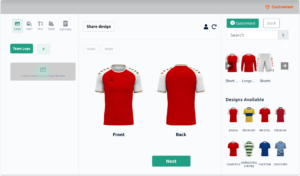
This PDF generation microservice case study shows how Custimoo automates manufacturing-ready tech pack PDFs using Node.js, Bull, and Puppeteer.
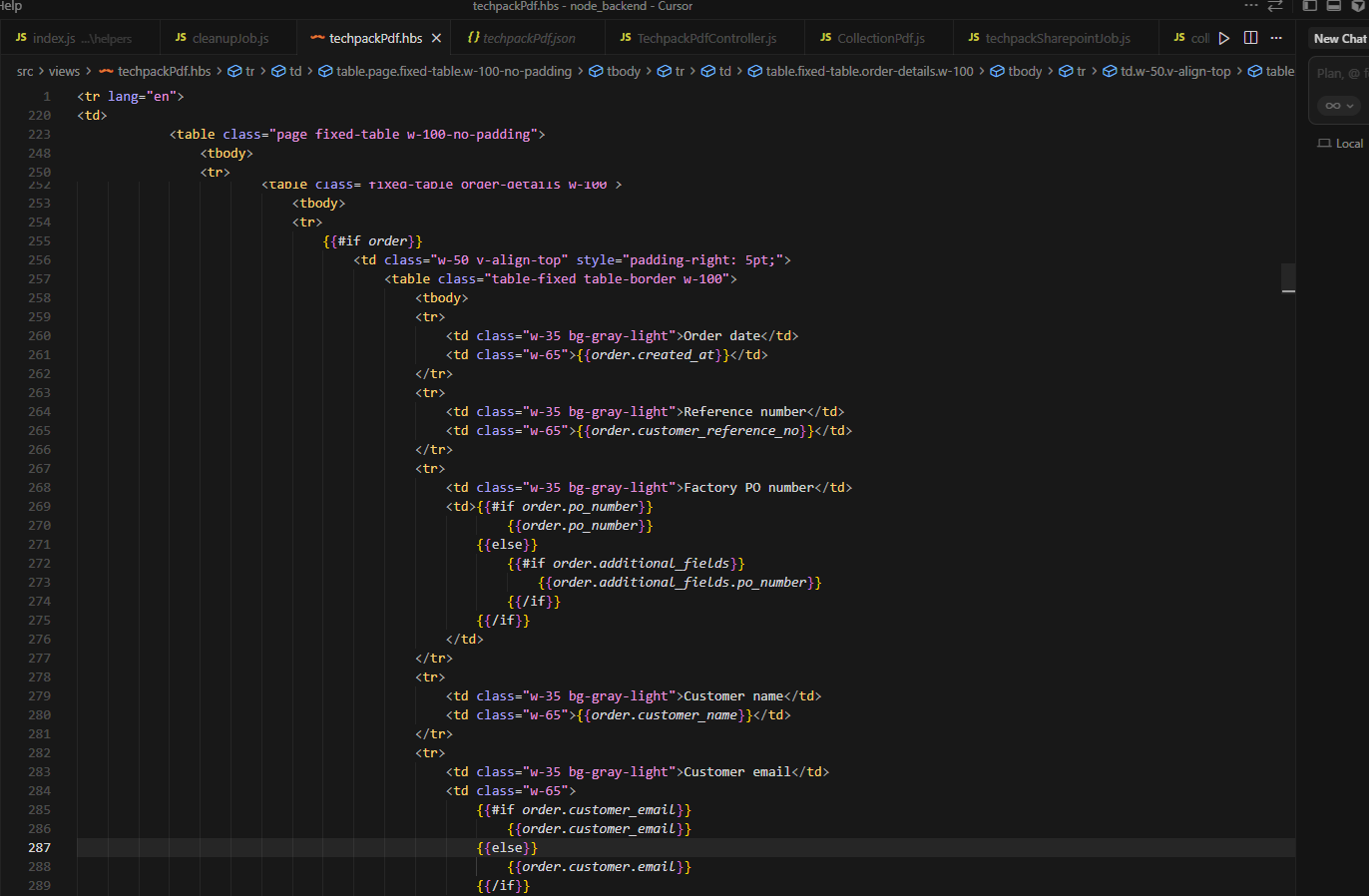
PDF generation microservice case study: This Custimoo project explains how a scalable Node.js microservice was built to generate manufacturing-ready tech pack PDFs for factories and production workflows.
Website: https://custimoo.com
Technologies: Node.js · Express · Bull · Puppeteer
Purpose: Generate manufacturing-ready tech pack PDFs for factories
PDF Generation Microservice Case Study Overview
This PDF generation microservice case study demonstrates how automated PDF generation can improve manufacturing accuracy and streamline production workflows.
Custimoo needed a robust solution to automate tech pack generation for factories. Tech packs are critical in the manufacturing process, containing all product specifications, designs, materials, and instructions required for production.
Before this project, manual PDF preparation caused delays, inconsistencies, and errors in factory communication. Custimoo’s factories required PDFs that were:
- Accurate and standardized
- Generated automatically from structured design data
- Scalable to handle growing product collections
“Factories can’t compromise on clarity — every missing detail or misaligned layout risks production errors.”
To address this, we designed a dedicated Node.js microservice capable of generating production-ready tech pack PDFs automatically, reliably, and at scale.
Problem — Manual PDF Generation Was Inefficient and Error-Prone
Before the microservice, Custimoo faced multiple challenges:
- Manual PDF creation consumed hours per product
- Errors in layouts caused costly production mistakes
- Scaling to larger collections of products was difficult
- Integration with the main Custimoo platform was fragmented
These inefficiencies directly affected factories and the supply chain timeline, slowing down production and impacting brand confidence.
“Our factories need PDFs that are instantly accurate and ready for production. Any delays or errors create bottlenecks.”
— Head of Operations, Custimoo
Solution — Dedicated Node.js Microservice
We built a dedicated PDF generation microservice with the following goals:
- Automate tech pack generation from structured product data
- Ensure layout precision for manufacturing-ready documents
- Optimize for scalability to handle large product collections
- Seamless integration with the main Custimoo platform
System Architecture
| Component | Technology | Purpose |
|---|---|---|
| Backend | Node.js, Express | API layer for microservice |
| Job Queue | Bull | Manage PDF generation jobs asynchronously |
| PDF Rendering | Puppeteer | Convert structured HTML/CSS templates into PDF |
| Data Source | Custimoo platform | Structured design data for products |
How It Works — Workflow Overview
- Product Design Submission
When a customer finalizes a order, structured design data (colors, sizes, graphics, fabrics) is sent to the microservice. - Job Queue Management
Using Bull, each PDF generation task is queued, ensuring reliable processing even under high load. - Dynamic PDF Rendering
Puppeteer converts HTML templates into PDFs that match factory-ready layouts. This ensures:- Precise alignment of images, text, and charts
- Clear size guides and material specifications
- Consistent branding across all tech packs
- Integration with Custimoo Platform
Generated PDFs are sent back to the platform and automatically attached to the product’s manufacturing record. Factories receive them instantly.
“The microservice acts like a production assistant — no manual intervention, no errors, and fully automated.”
The 5 Proven Wins
In this PDF generation microservice case study, we highlight 5 proven wins that transformed Custimoo’s manufacturing operations.
5 Proven Wins from Custimoo’s PDF Generation Microservice
1. Manufacturing-Ready Tech Pack Accuracy
The microservice generates pixel-perfect, factory-ready tech pack PDFs using structured product and design data. This eliminated manual layout errors and ensured manufacturers received consistent, production-accurate documents every time.
“Accurate tech packs reduce production mistakes, save material costs, and speed up factory approvals.”
2. Scalable PDF Generation Under Heavy Load
By leveraging Node.js with Bull queues, the service processes thousands of PDF generation jobs without blocking the main application. Background workers handle rendering efficiently, even during peak design and order activity.
Result: Reliable PDF output at scale with no performance degradation.
3. High-Fidelity Rendering with Puppeteer
Using Puppeteer (headless Chromium) ensured PDFs matched on-screen designs exactly. Complex layouts, typography, measurements, and image positioning were rendered consistently across all factory documents.
“What designers see in the customizer is exactly what factories receive in the PDF.”
4. Seamless Integration with Custimoo’s Platform
The microservice was built as a decoupled backend service, allowing smooth integration with Custimoo’s existing systems. Product collections, variants, and design data flow securely into the PDF service via APIs.
Benefit: Faster development cycles and independent scaling.
5. Reduced Operational Cost & Faster Production Cycles
Automated PDF generation removed the need for manual tech pack creation, significantly reducing operational overhead. Factories received instant PDFs, enabling quicker approvals and faster manufacturing starts.
“Automation turned hours of manual work into seconds.”
Technical Challenges & Solutions
The architecture described in this PDF generation microservice case study showcases how Node.js, Bull, and Puppeteer work together to generate scalable and reliable PDFs.

1️⃣ Handling Complex Layouts
- Challenge: Some products have variable graphics, multiple layers, and nested tables, making PDF rendering tricky.
- Solution: Puppeteer templates were dynamically generated using flexible HTML/CSS grids, allowing complex layouts without breaking.
2️⃣ Scalability
- Challenge: Large product collections could overwhelm the system.
- Solution: Bull queue and Redis enabled asynchronous processing with job prioritization, ensuring smooth operation even during peak loads.
3️⃣ Integration with Main Platform
- Challenge: PDF generation had to work seamlessly with Custimoo’s main platform.
- Solution: We created RESTful endpoints and webhook-based callbacks, allowing the main platform to trigger PDF jobs and receive results in real-time.
4️⃣ Accuracy & Reliability
- Challenge: Any misalignment in tech packs could cause production errors.
- Solution: Implemented automated testing of templates, including rendering preview PDFs for verification before dispatch.
Key Features
Automated Tech Pack Generation
- PDFs include all product specifications, images, design details, materials, and instructions.
- Templates are dynamic, adapting to product complexity.
Scalable Queue Management
- Bull manages thousands of PDF jobs per day.
- Supports retries, failures, and job prioritization.
Precision Layout Rendering
- Puppeteer ensures pixel-perfect PDF layouts.
- Works for simple and complex designs alike.
Seamless Platform Integration
- REST APIs connect the microservice with the main Custimoo platform.
- PDFs are delivered automatically to manufacturing dashboards.
Impact — Business & Operational Benefits
1️⃣ Efficiency
- Reduced manual PDF creation from hours to seconds per product.
2️⃣ Accuracy
- 100% layout fidelity ensures factories get consistent, manufacturing-ready PDFs.
3️⃣ Scalability
- Capable of processing thousands of PDFs per day without performance issues.
4️⃣ Reduced Errors
- Automated generation eliminated human errors, leading to fewer production mistakes.
“Since deploying this microservice, our factories no longer experience layout errors, and production timelines are more predictable.”
— Operations Manager, Custimoo
Tech Stack Highlights
- Node.js & Express: Lightweight, efficient server handling
- Bull: Reliable, scalable job queue for asynchronous processing
- Puppeteer: Browser-based PDF rendering for perfect layout fidelity
- Integration: REST APIs and webhooks connect with the main Custimoo platform
Workflow Diagram (Optional for Web)
[Product Data] → [Node.js API] → [Bull Queue] → [Puppeteer Rendering] → [Generated PDF] → [Custimoo Platform / Factory]
Challenges Overcome
- Handling dynamic product designs without breaking PDFs
- Scaling asynchronous job processing under heavy load
- Ensuring real-time delivery to the manufacturing dashboard
- Maintaining accuracy across multiple product templates
“This microservice is the backbone of our manufacturing process — reliable, fast, and accurate.”
Future Roadmap
- Add custom template editor for factories
- Generate multi-language PDFs for international production
- Integrate AI-assisted layout optimization for faster design adaptation
- Build analytics dashboard for PDF generation metrics
FAQs
Q1: What is a PDF generation microservice case study?
A: A PDF generation microservice case study demonstrates how a dedicated backend service automates the creation of manufacturing-ready PDFs from structured product data. It highlights architecture, technologies, and business impact.
Q2: How does the PDF generation microservice work in this case study?
A: In this PDF generation microservice case study, the Node.js service uses Bull queues to manage jobs and Puppeteer to render accurate PDFs for factories, ensuring scalability and reliability.
Q3: What are the main benefits shown in this PDF generation microservice case study?
A: The case study highlights five proven wins:
- Accurate manufacturing-ready PDFs
- Scalable PDF generation
- High-fidelity rendering with Puppeteer
- Seamless integration with the main platform
- Reduced operational costs and faster production cycles
Q4: Which technologies are used in this PDF generation microservice case study?
A: This PDF generation microservice case study leverages:
- Node.js for backend
- Express for API handling
- Bull for asynchronous job queues
- Puppeteer for PDF rendering
Q5: Why is this PDF generation microservice case study important for factories?
A: This PDF generation microservice case study demonstrates how automating tech pack PDFs improves production accuracy, reduces errors, and speeds up manufacturing workflows.
Conclusion — Transforming Manufacturing Workflow
The Custimoo PDF generation microservice is more than just a technical solution — it streamlines factory workflows, reduces errors, and scales with product growth. By leveraging Node.js, Express, Bull, and Puppeteer, the team delivered a solution that bridges the gap between design and manufacturing seamlessly.
Overall, this PDF generation microservice case study proves that automating tech pack PDFs reduces errors, saves time, and scales efficiently for factories.
Interested in a Similar Solution?
Interested in building a scalable microservice like this?
Hire a senior full-stack developer to design and implement reliable PDF generation systems, backend microservices, and production-ready workflows.
Check out our Hire a Senior Full-Stack Developer page for full-stack and backend development solutions.